-
Founders Hub
Find what you're looking for
By support
By founder type
-
Irish Ecosystem
Explore key sectors & ecosystem insights
Ecosystem
- News & Insights
- About
How can we help?

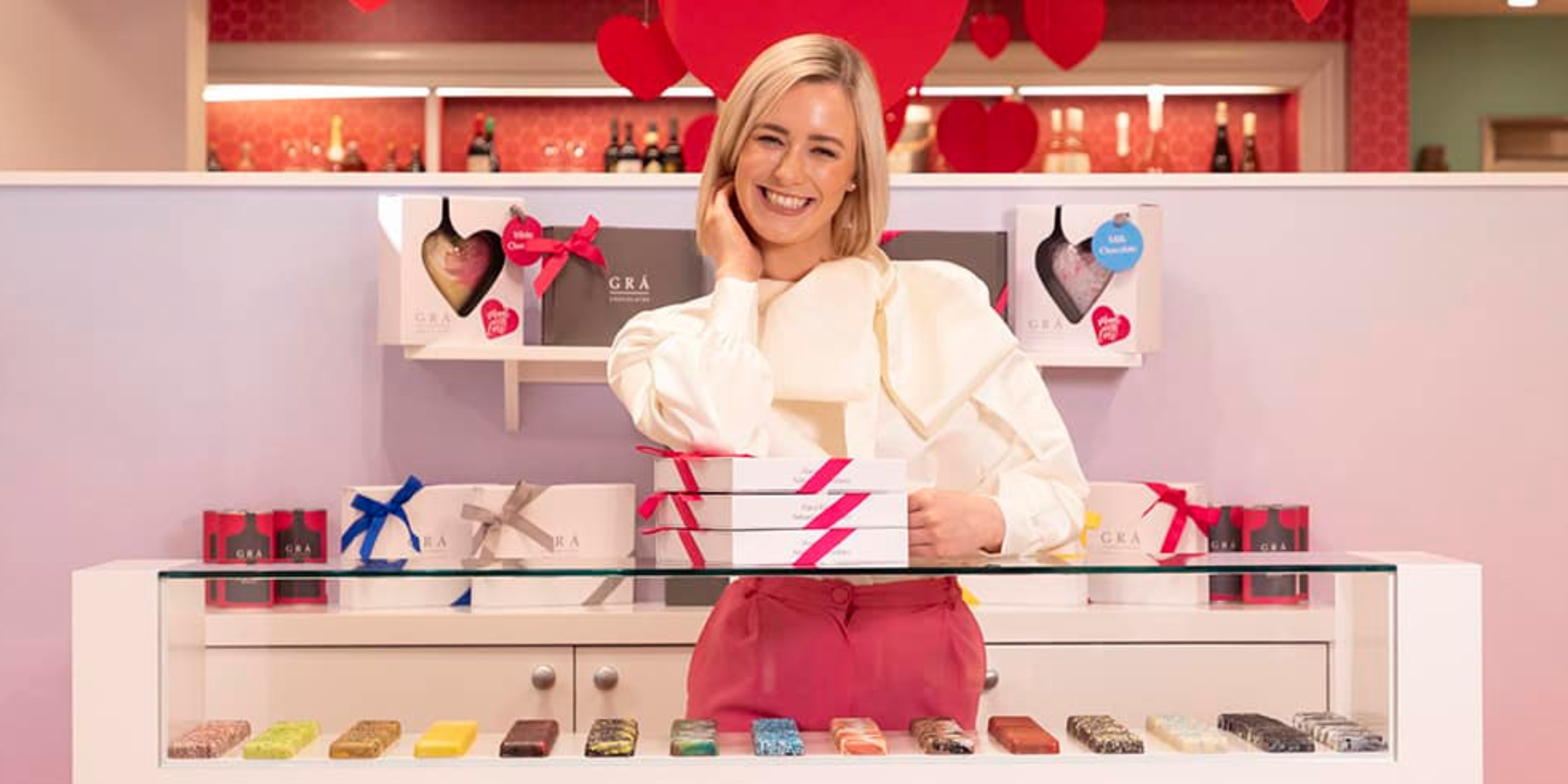
Some businesses begin with a spreadsheet. This one began with an Easter egg.
Gráinne Mullins had spent around a decade as a pastry chef in fine-dining kitchens when the pandemic brought the industry to a halt. Hers was no ordinary CV. She had worked in a Michelin-starred restaurant in Aix-en-Provence, returned to lead Irish kitchens, and been named Euro-Toques Young Chef of the Year in 2019. Then, almost overnight, the kitchens closed.
Off work during lockdown, Gráinne started making hand-painted chocolate Easter eggs for friends and family, and sharing them on social media. It was a way to keep her craft alive, not a business plan. But the market, as it often does, spoke first, when people began asking where they could buy them.
That question was a real opportunity, and Gráinne treated it as one. Rather than diving straight in, she spent around three months researching whether there was a viable business behind the demand, taking business courses to fill the gaps in her knowledge. It’s an important detail: a world-class chef recognising that culinary mastery and business readiness are two different things. Grá Chocolates launched in July 2020 and its first online sale sold out in just nine minutes.
Building the brand
From the very beginning, Gráinne made a defining strategic choice that Grá Chocolates would compete on craft, not speed. In a market where scale usually means standardisation, she deliberately went the other way.
Each chocolate is made in small batches using hand-polished moulds, hand-painted decoration and premium ingredients including Valrhona chocolate, Casa Luker cocoa butter and Irish dairy. Some pieces take four days to produce. Rather than seeing this slower process as a limitation, Gráinne built the business around it. The care, attention and skill behind every chocolate became a key part of what customers were buying.
Social media did the rest, and did it cleverly. Rather than leaning on paid advertising, Gráinne used the sheer visual beauty of the product and the genuine story behind it to draw customers in, with gifting acting as a natural engine of discovery, as each recipient became an introduction to a new audience. This is brand-building at its most efficient: A product people genuinely want to photograph and talk about, doing the marketing that a startup budget can’t. As demand grew, the business graduated from a pre-order model to a full e-commerce operation.
The support
If there’s one thread that runs through Grá Chocolates’ growth, it’s Gráinne's instinct to reach for the support around her early, and often.
She contacted her Local Enterprise Office near the start of the journey. Local Enterprise Office Galway pointed her towards relevant training and supports, including a Priming Grant that helped fund a small chocolate production facility, and further funding to improve the e-commerce experience
She later heard about New Frontiers through a Local Enterprise Office event and joined the programme after the business had already launched, showing that founder programmes aren’t only for the pre-launch stage.
For Gráinne, one of the greatest benefits wasn’t a specific skill but a community and being surrounded by other founders facing the same challenges. It gave her people to share the hard days and the wins with, while she kept developing as a founder.
That willingness to use every support available hasn’t faded as the business has grown, it’s become part of how Grá Chocolates operates.
Growing demand
What began at Gráinne’s family home has grown into a recognised Irish luxury food brand.
Grá Chocolates expanded beyond direct e-commerce into premium retail, initially through Brown Thomas, and later a wider network of stockists, developed corporate sales and international shipping. Through all that growth, the brand has stayed proudly rooted in County Galway, where its chocolates continue to be handmade.
In 2024, Grá Chocolates was named Best in the West Region at the National Enterprise Awards, recognition both of the company's growth and of the role Local Enterprise Office Galway played in supporting it.
But scale brought the classic craft-business dilemma into focus: How do you become more efficient without losing the very craft and quality the brand was built on?
Working smarter
As production increased, the informal processes that had served a tiny team began to strain. This is a pivotal - and often underestimated - moment for any growing product business: The point where doing more of the same, harder, simply stops working.
Grá Chocolates turned to the Lean for Business programme to find inefficiencies and reduce costs, without compromising the product. Working with a Lean mentor, the team examined the business end to end—marketing, production, packing- and put real structure in place: standard operating procedures for individual products, clearer production and packing schedules, and systems for tracking how long tasks actually took.
The goal was never to strip the craft out in pursuit of speed. It was to build the operational backbone that lets the craft scale. It’s a great example of a founder professionalising operations at exactly the right time.
What's next
The business has recently taken possession of a new headquarters in East Galway, bringing the company back close to where it all began. The plan is ambitious but true to its roots: To transform the space into a larger production facility with room to grow the team, increase capacity and create an interactive chocolate experience for visitors.
And yet the ingredients behind the growth remain much the same as they were with those first lockdown Easter eggs: craft, curiosity, a willingness to learn and the confidence to act the moment an opportunity appears.
Key takeaways for other founders
- Test the demand before you commit. Gráinne shared her chocolates, saw people ask to buy them, then spent three months researching before launching. Real demand, proven cheaply, came first.
- Your craft and your business are two different skills. A Michelin-trained chef still took business courses. Recognising what you don’t yet know, and closing the gap deliberately, is a founder strength, not a weakness.
- Let the product do the marketing. A genuinely beautiful, story-rich product plus gifting built demand without heavy ad spend. Build something people want to share and discovery compounds.
- Use every support around you. LEO grants, New Frontiers, Lean for Business, the Enterprise Awards. Gráinne treated the ecosystem as a toolkit and reached for it repeatedly. The supports exist; the advantage goes to founders who use them.
- Add process without losing soul. Scaling a craft business is about building the operational backbone that protects quality, not sacrificing it for speed. Introduce structure at the point where informal stops working.
Check out the funding and programme sections of this website to find out what help might be available and get in touch today.
Disclaimer: The information provided in this article is for general informational purposes only and does not constitute professional advice. While we strive to provide accurate and up-to-date information, readers should consult a qualified expert or professional before making any decisions or taking any actions based on the content.
Speak to a Startup Ireland advisor
Whether you’re looking to validate your startup idea or getting set to grow internationally, talk to an advisor to understand the relevant supports available and to navigate the first steps to access them.
Contact Startup Ireland:
Phone lines are open Monday to Friday, 9am–5pm (Irish Standard Time).